

The 3 Lyme Symptoms Doctors Miss Most — And the Hidden Red Flags You Shouldn’t Ignore
Nov 29, 2025
The 3 Lyme Symptoms Doctors Miss Most (And the Red Flags You Shouldn’t Ignore)
Did you know that up to 60% of Lyme disease cases go undiagnosed — sometimes for years?
Lyme is one of the most commonly misdiagnosed infections because its symptoms overlap with dozens of everyday conditions. Many people are told their symptoms are due to stress, aging, migraines, ADHD, or even depression… when in reality, Lyme disease may be the hidden cause.
In this guide, we break down the three symptoms doctors miss most often, the red flags that make them more suspicious for Lyme, and when to seek testing or a Lyme-literate specialist.
Why Lyme Disease Is Missed So Often
There are four main reasons Lyme goes undiagnosed:
-
The symptoms look like other conditions
Fatigue, joint pain, and brain fog are extremely common complaints. -
Not everyone gets the classic “bullseye” rash
Only about 20–30% of patients remember having a rash. -
Standard tests can be unreliable early on
Antibodies often don't appear until weeks after infection. -
Most tick bites are never noticed
Ticks can be the size of a poppy seed — many people never feel them.
Because symptoms often develop slowly, people may spend months or years visiting different specialists before receiving the right diagnosis.
Symptom #1: Chronic Fatigue & Flu-Like Symptoms
Fatigue is one of the most commonly misdiagnosed Lyme symptoms — partly because it overlaps with so many conditions. People are often told they have:
- Chronic Fatigue Syndrome
- Viral infections
- Depression or anxiety
- Hormonal imbalances
- Stress-related burnout
Why This Fatigue Is Different
Lyme fatigue has a distinct pattern:
- It comes in cycles — you may have “good” and “bad” weeks
- It pairs with migrating aches or fever spikes
- It often starts weeks or months after outdoor exposure
- It’s frequently accompanied by sleep disturbances and brain fog
Red Flags for Lyme-Related Fatigue
- Fatigue that appears after outdoor activity
- Fatigue that fluctuates instead of staying constant
- Fatigue accompanied by neurological symptoms like headaches, confusion, or tingling
Quick Tip: Symptoms that move, fluctuate, or appear in clusters should raise suspicion for Lyme.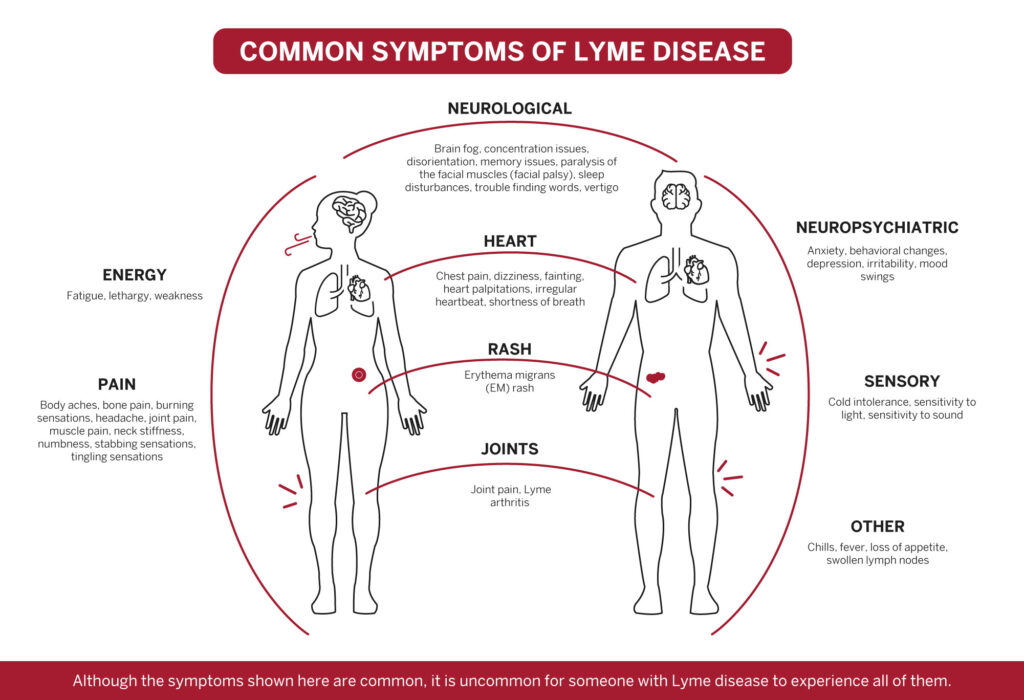
Symptom #2: Joint Pain & Inflammation
Joint symptoms from Lyme are commonly mistaken for:
- Arthritis
- Overuse injuries
- Fibromyalgia
- Age-related joint degeneration
- Why Lyme Joint Pain Is Unique
Lyme joint pain is rarely constant. It tends to:
- Move from joint to joint (knees → shoulders → elbows → wrists)
- Flare unpredictably
- Cause swelling that comes and goes
Classic Red Flags
- Knee swelling is one of the most well-known Lyme indicators
- Pain that seems disproportionate to your activity level
- Joint pain paired with neurological symptoms
Quick Tip: A “joint pain timeline” that jumps between different joints is strongly suggestive of Lyme.
Symptom #3: Neurological Issues
Neurological Lyme is one of the most misdiagnosed forms. These symptoms are often interpreted as:
- Anxiety
- ADHD
- Migraines
- Multiple sclerosis
- Peripheral neuropathy
Why These Symptoms Can Point to Lyme
Lyme can affect both the central and peripheral nervous systems, leading to:
- Fluctuating cognitive issues (“Lyme brain”)
- Numbness, tingling, or burning sensations
- Sensitivity to light or sound
- Word-finding issues or difficulty multitasking
- Facial palsy (Bell’s palsy) — especially in younger people
Neurological Red Flags
- Symptoms that appear after a flu-like illness or rash
- Cognitive issues that fluctuate instead of staying steady
- Facial asymmetry
- Sensory changes that don’t fit a classic diagnosis
Quick Tip: Neurological Lyme can appear before you realize you were bitten.
Why Doctors Miss These Symptoms
Even well-trained professionals can overlook Lyme because:
- Symptoms develop slowly
- They resemble more common diagnoses
- Standard tests may show false negatives early
- Patients often appear “healthy” between flare-ups
This is why patterns matter more than individual symptoms.
When to Seek Testing or a Lyme-Literate Doctor
You may want to consider an evaluation if you experience:
- Migrating symptoms (pain or fatigue that moves)
- A combination of fatigue + joint pain + neurological changes
- Symptoms that worsen after outdoor exposure
- No clear diagnosis despite multiple evaluations
About Lyme Testing (Educational Only)
Lyme-literate professionals often use:
- ELISA + Western blot
- Differences between IgM (early) and IgG (later) antibodies
- Additional specialty labs useful in complex or late-stage cases
(Note: This is not medical advice — testing should be guided by a qualified professional.)

Key Takeaways
- Fatigue that cycles is a major red flag
- Joint pain that moves is classic for Lyme
- Neurological symptoms without a clear cause deserve attention
- Tracking symptom patterns is one of the most helpful diagnostic tools
What to Do Next
If you suspect your symptoms are being overlooked:
- Start a symptom tracking journal
- Watch for patterns that move or appear in clusters
- Consider evaluation by a Lyme-informed practitioner
- Continue learning — early detection dramatically improves outcomes
- Take action on a holistic wellness track, because it's helpful no matter where you are in life.
- Put more life in your years, and more years in your life!
Want a Free Lyme Test?
Do you have Lyme disease?
This is not a diagnosis, but it's clear logic of how exposed to the risks of Lyme you are:
https://FreeLymeTest.com


